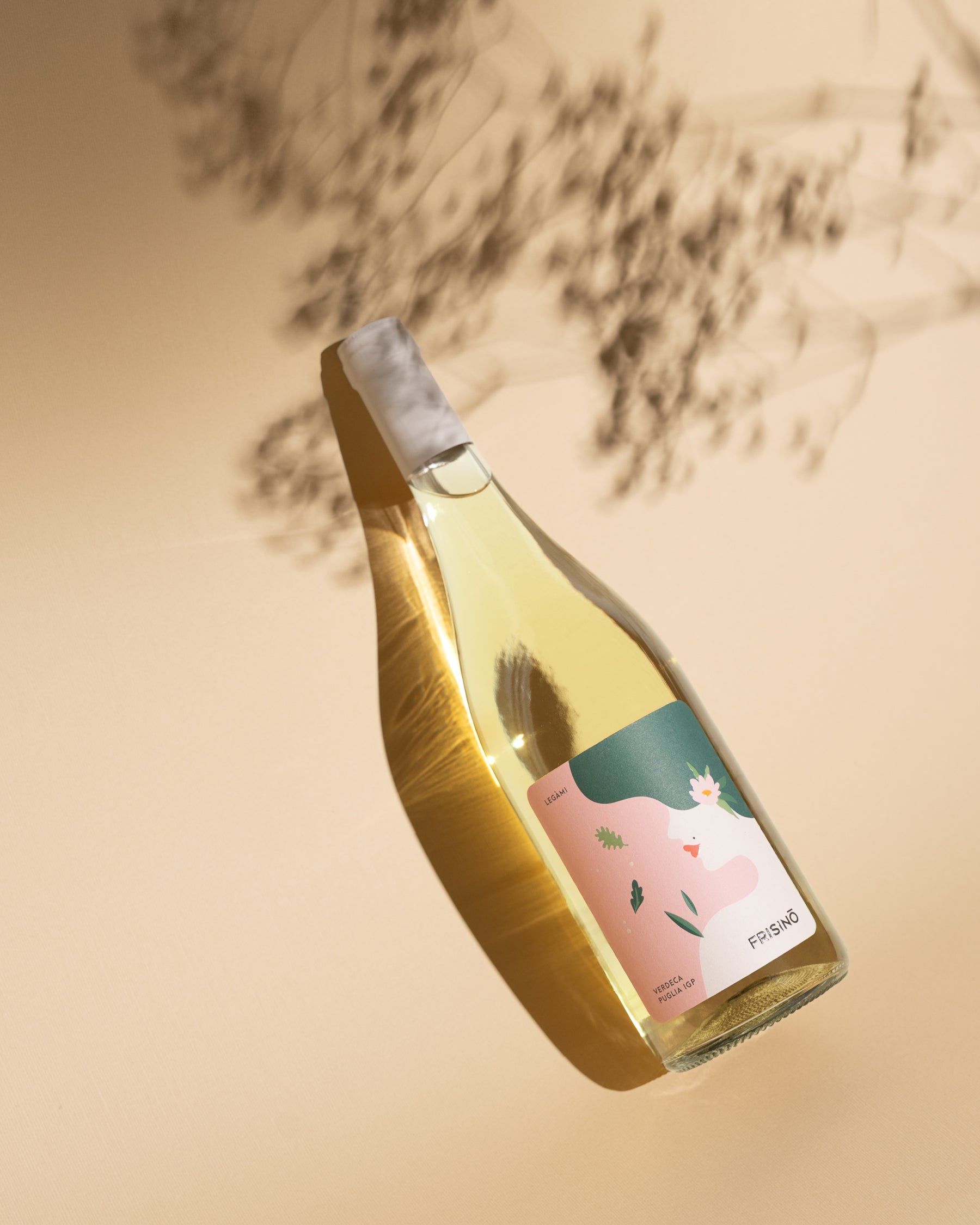
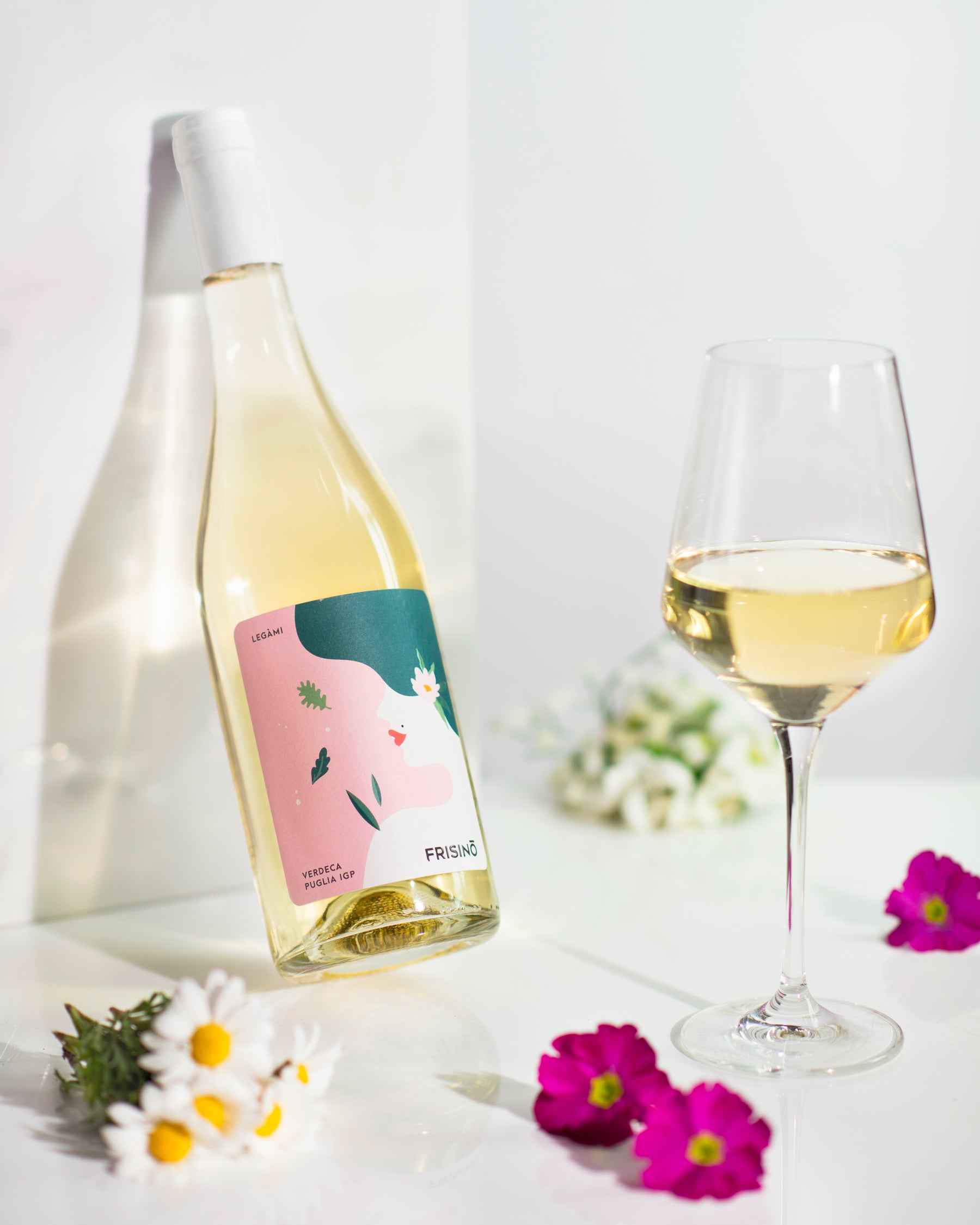
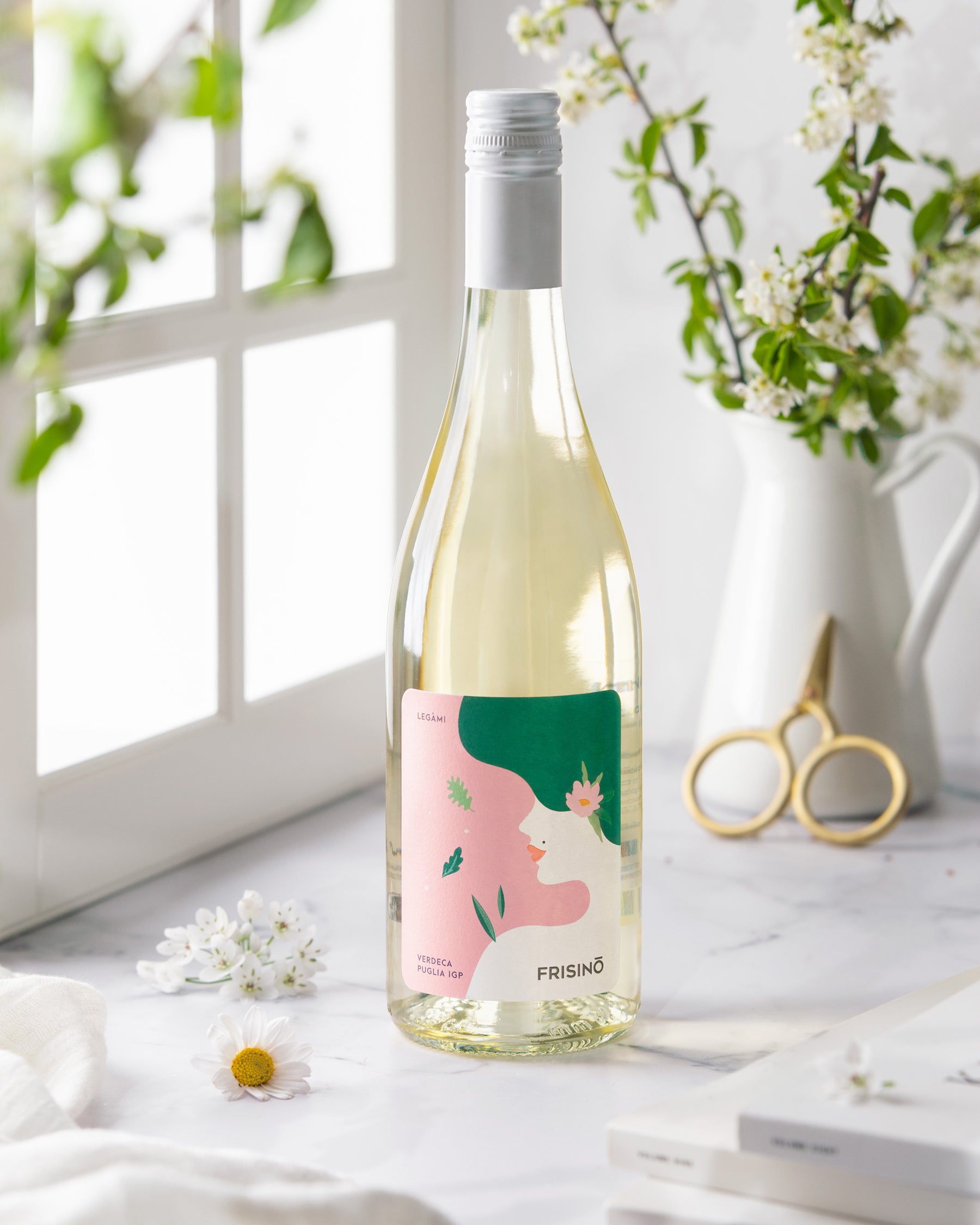
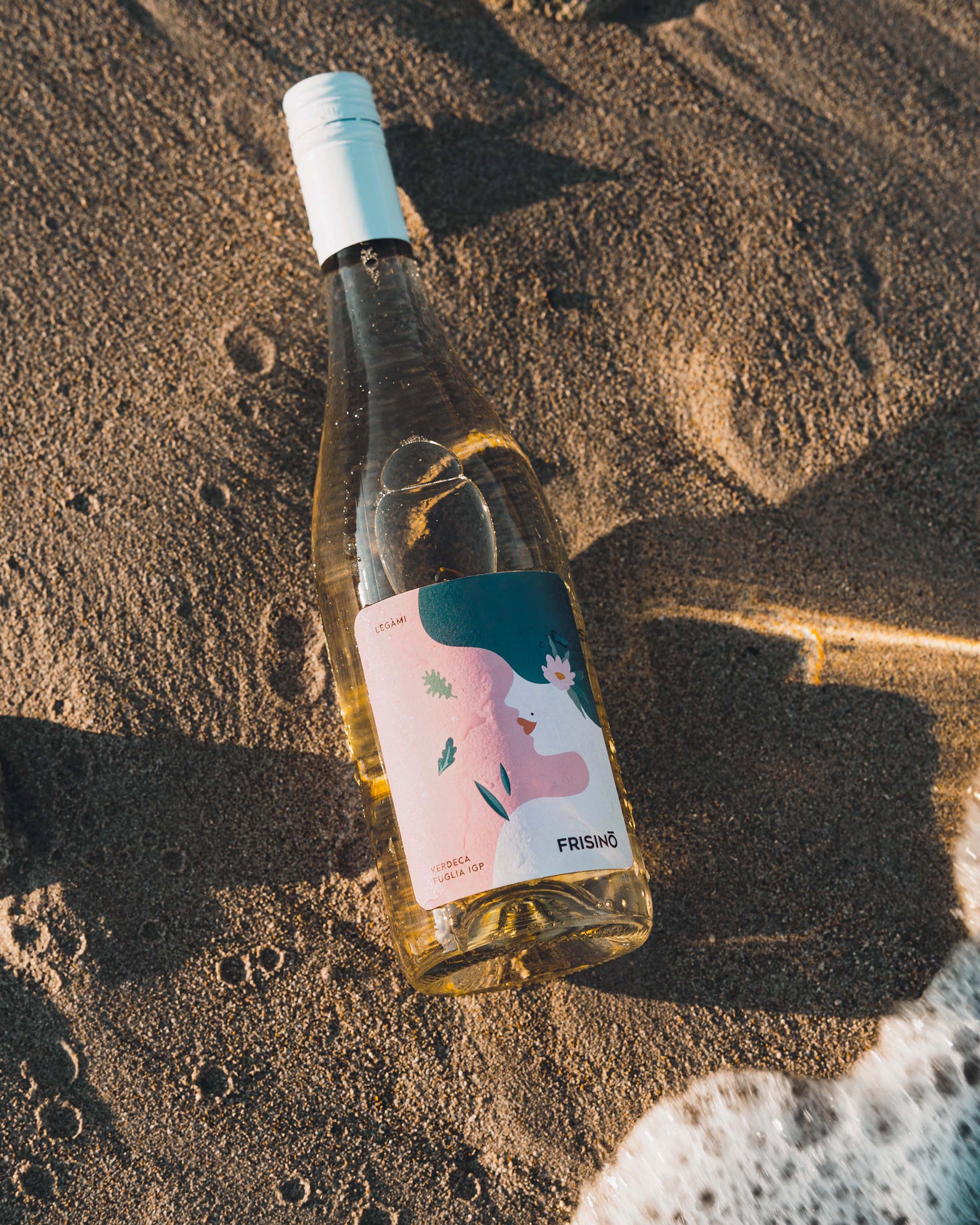
Legàmi
Verdeca Puglia IGP
FRUTTATO | ACIDO | SAPIDO
→ il vino
→ l'olio evo
→ la giftbox
Vino bianco di colore giallo paglierino con riflessi verdolini, dal profumo delicato e persistente. Emergono sentori di fiori d’arancio, canfora e scorza di limone. Caratteristico finale balsamico con note di rosmarino e salvia. Gusto fresco, acidulo e persistente, sapido con leggere sfumature minerali.
*Wine sold and shipped exclusively in Italy
Spedizione rapida gratuita per ordini sopra 100€
Pagamento Sicuro
→ la storia
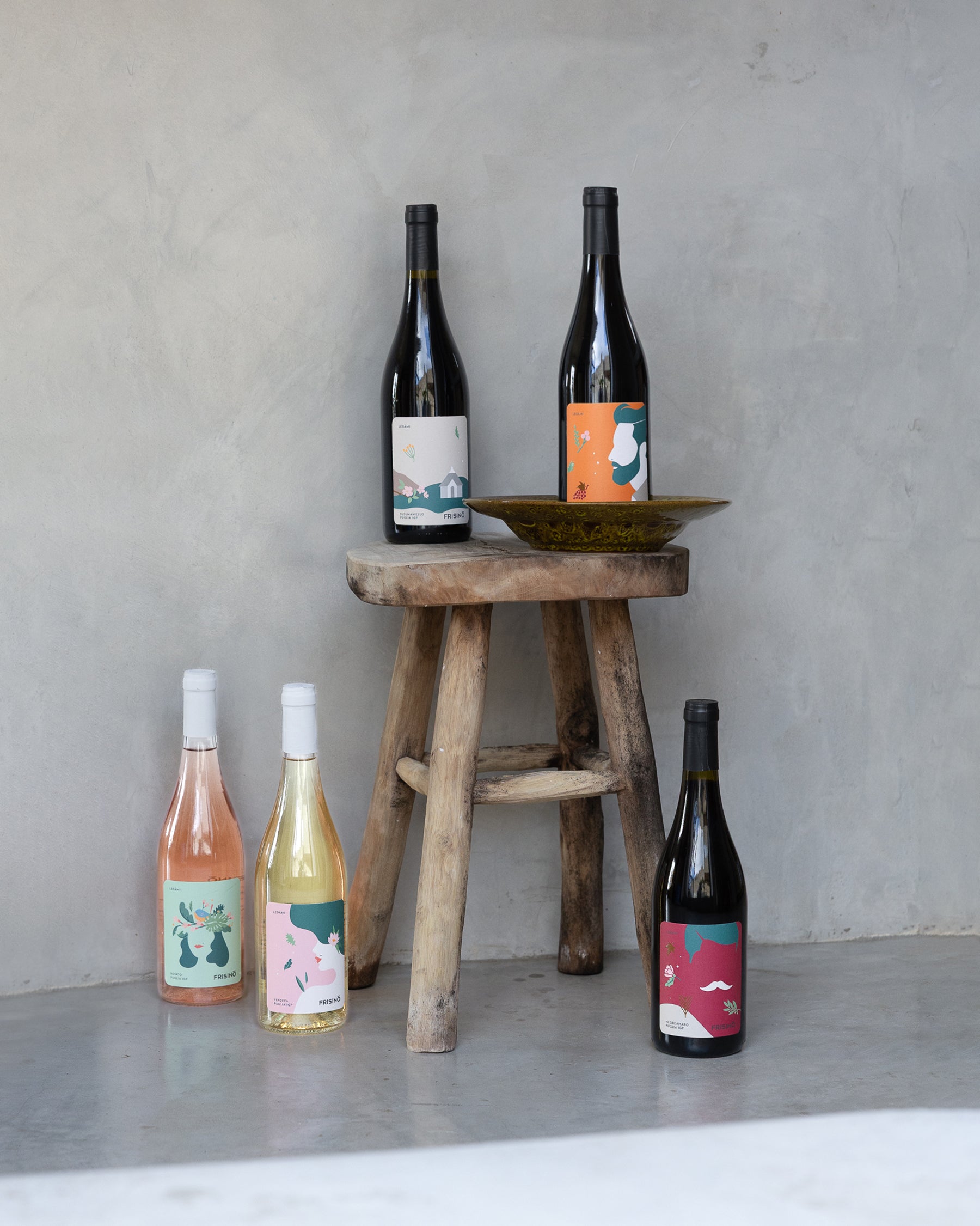
Una wine collection che racconta una storia di famiglia e del suo legame, unico e indissolubile. Vecchie e nuove generazioni unite dalla stessa passione per il vino. Cinque etichette che rappresentano il volto dei componenti: i genitori, Mario e Pina, ed i figli, Flavia e Francesco, e la loro terra, la Puglia. La freschezza della nuova generazione che si ritrova in questa linea di vini, tutti molto freschi e beverini. Cinque vini del tutto differenti tra loro che esprimono i loro caratteri e tratti distintivi.
Alcune Curiosità
SUOLO: Calcareo-argilloso
CLIMA: Precipitazioni annue totali: 875 mm. Temperatura media 1 aprile - 10 ottobre: 19,7 °C
PERIODO DI RACCOLTA: prima decade di Settembre
VINIFICAZIONE: le uve vengono diraspate e sottoposte a una soffice pressatura, a seguito una breve macerazione a freddo. La fermentazione avviene in serbatoi d’acciaio a temperatura controllata di 14-16°C per 20 giorni. Nella fase di affinamento, il vino riposa per 5 mesi in acciaio, seguiti da ulteriori 2 mesi di affinamento in bottiglia.
ALCOHOL: 12,5% VOL
Enologist's Notes:
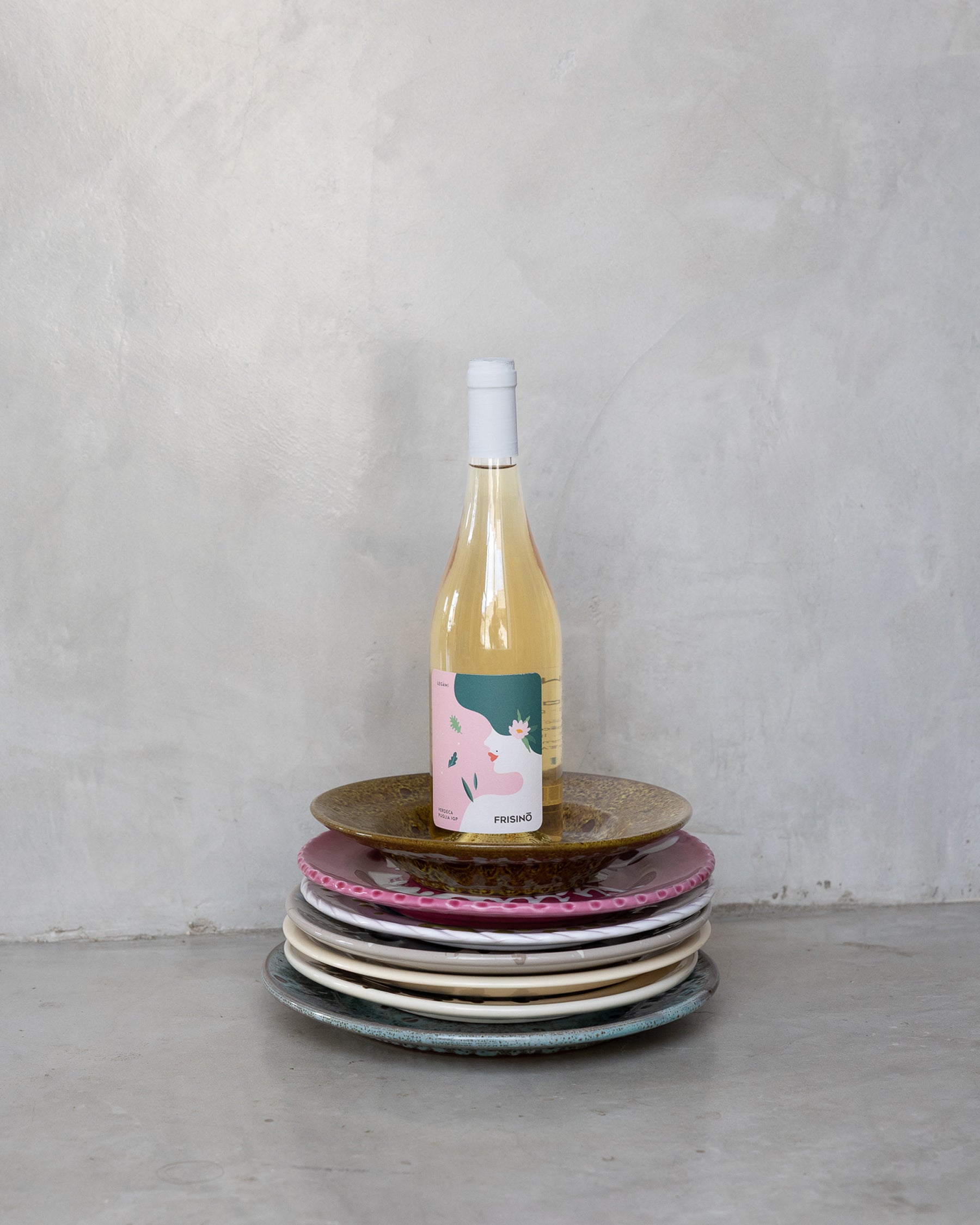
Ideale con
FISH
Gallery
Vigneto di Origine

Recensioni
Prodotti Correlati
Domande Frequenti
Un vino è considerato tannico quando crea una sensazione di secchezza o astringenza in bocca, causata dai tannini presenti nelle bucce, nei semi o nel legno dell'uva. Quando ben equilibrati, i tannini conferiscono struttura e potenziale di invecchiamento.
I vini bianchi e gli spumanti si servono meglio tra 8 e 12°C (46–54°F), mentre i vini rossi esprimono al meglio i loro aromi e la loro struttura tra 16 e 18°C (61–64°F).
L'invecchiamento si riferisce al periodo di riposo dopo la fermentazione — in acciaio inox, legno o bottiglia — durante il quale il vino sviluppa complessità, equilibrio e aromi più raffinati.
La decantazione è consigliata per i vini rossi strutturati o invecchiati, al fine di separare eventuali sedimenti e favorire l'ossigenazione. Il vino viene versato lentamente in una caraffa; anche i rossi giovani e tannici possono beneficiare della decantazione, risultando più armoniosi.
Nel Metodo Classico, la seconda fermentazione avviene in bottiglia, seguita da una lunga permanenza sui lieviti, che conferisce eleganza e aromi complessi. Nel Metodo Charmat, la seconda fermentazione avviene in autoclave, producendo uno spumante fresco, aromatico e di pronta beva.
Il vino va conservato in un luogo fresco e buio, a temperatura costante. Le bottiglie tappate con sughero naturale dovrebbero essere posizionate orizzontalmente per mantenere il tappo umido e garantire una chiusura ermetica nel tempo.
Le olive vengono raccolte precocemente, quando sono ancora verdi o appena cominciano a maturare. Questa raccolta anticipata produce un olio più ricco di aromi e polifenoli, con una maggiore stabilità ossidativa.
L'olio d'oliva Frisino è estratto a freddo mediante un moderno sistema a due fasi, che preserva le caratteristiche naturali delle olive. Viene poi filtrato, una fase fondamentale per garantire stabilità nel tempo, chiarezza aromatica e una conservazione ottimale.
Il formato bag-in-box offre una protezione ottimale dall'ossigeno e dalla luce. Il suo sistema sottovuoto previene l'ossidazione durante l'utilizzo, mantenendo l'olio fresco più a lungo. È inoltre una soluzione più leggera, pratica e sostenibile.
La Coratina è un cultivar pugliese dal carattere deciso e intenso: amaro e piccante pronunciati, con un alto contenuto di polifenoli. È un olio strutturato, ideale per piatti dai sapori forti e robusti. La Peranzana è più delicata ed elegante, con note di pomodoro, erba fresca e mandorla. Il suo profilo armonioso la rende perfetta per l'equilibrio e la versatilità in cucina.
L'olio extravergine di oliva va conservato in un luogo fresco e asciutto, lontano da fonti di luce e calore. La data di scadenza è indicata sull'etichetta; tuttavia, per apprezzarne appieno gli aromi e le proprietà, si consiglia di consumarlo entro l'anno di produzione.
Questa sensazione è un segnale di alta qualità ed è causata dai polifenoli — potenti antiossidanti naturali che aiutano a proteggere le cellule dallo stress ossidativo. In sintesi, un leggero "pizzicore" in gola indica un olio ricco di composti benefici.



.svg)